Start from the printer, not the roll name
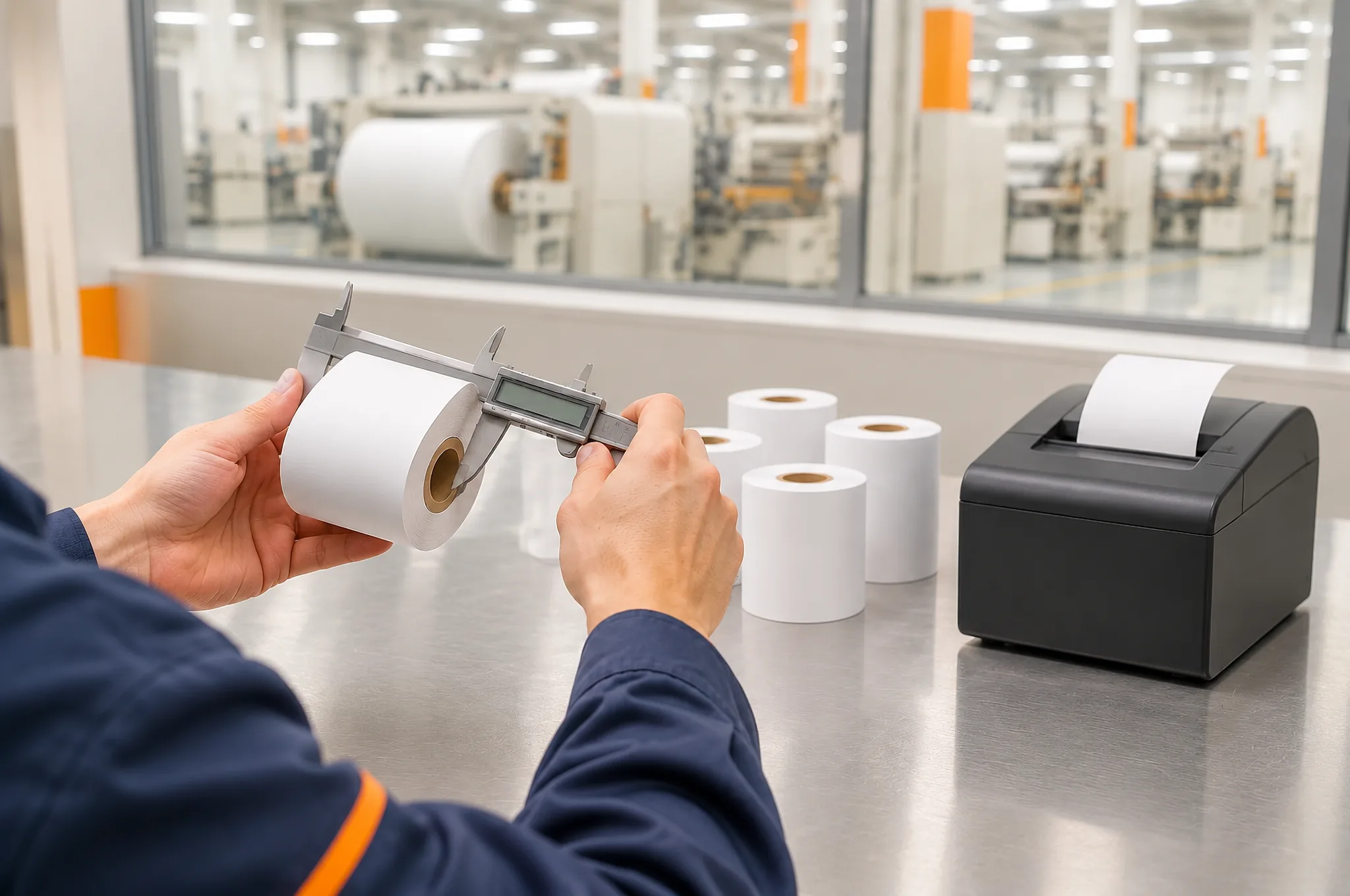
A thermal roll is correct only when it fits the machine that consumes it. Record the printer model, maximum compartment diameter, paper width and spindle core diameter before comparing suppliers. These values remove most post-delivery mismatches.
If an existing roll works, measure width, outside diameter and core rather than relying on a generic carton label. Add a clear photograph and the current carton count to the inquiry.
Paper weight, length and image density are separate choices
Base-paper weight affects stiffness, opacity and how many metres fit inside a fixed outside diameter. A heavier sheet may feel more substantial but normally gives fewer metres at the same roll size.
Image density depends on the coating and printer settings. Approve the proposed paper on the target printer, and record both paper weight and stated length in the order specification.
Core, winding and packing complete the specification
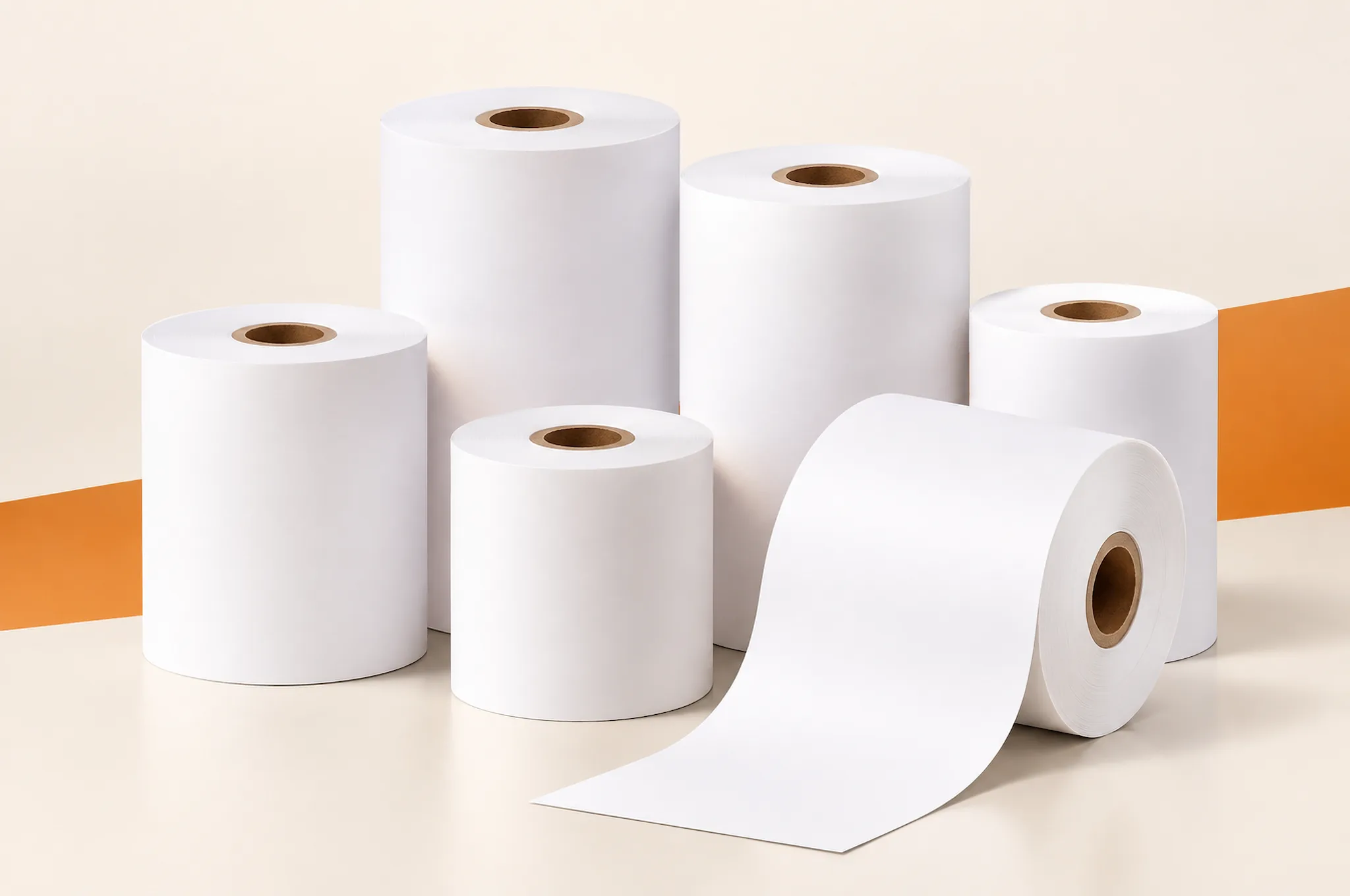
Core material and inner diameter affect seating and end-of-roll feeding. Winding tension affects roll shape, while inside or outside winding must follow the machine path.
Confirm rolls per pack, packs per carton, carton dimensions, carton marks and pallet requirement. Packing is part of the product buyers receive, not an afterthought.
Build a repeatable order document
Put width, diameter or length, paper weight, coating, core, winding, print and packing on one controlled sheet. Reference it on the purchase order and retain the approved sample.
Paper Choice reviews these values before converting and separates any BPA/BPS laboratory-document request from the physical roll specification.
Purchasing checklist
Points to confirm before quotation
- Printer model and compartment limits recorded
- Width, paper weight and stated length listed together
- Core material and winding direction confirmed
- Carton and pallet structure agreed
- Approved sample retained